A New Frontier in Education
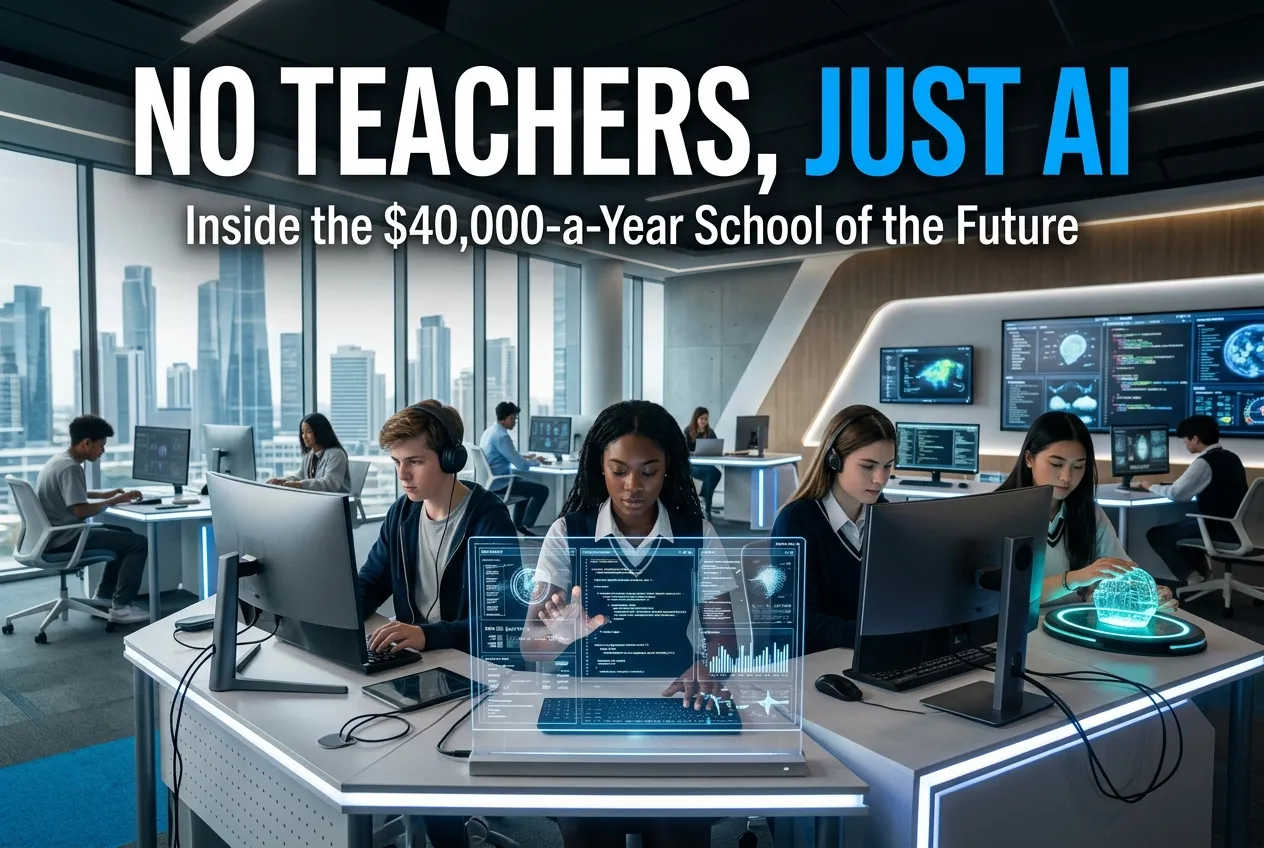
In a move that sounds like it was pulled from the pages of a science fiction novel, a new private school is set to open its doors in Oklahoma this August. The institution, named Alpha, is making headlines for its radical educational model: there will be no human teachers. Instead, students will be guided entirely by an artificial intelligence system. With an annual tuition of $40,000, Alpha is positioning itself as a pioneer in a bold new era of learning. This development is forcing educators, parents, and technologists to ask a critical question: Is this an innovative leap forward that will revolutionize education, or a dangerous experiment that strips the humanity from one of our most fundamental institutions?
The AI-Powered Classroom
At the heart of Alpha's model is the promise of truly personalized learning. The school's AI platform is designed to act as a one-on-one tutor for every student, tailoring lessons, exercises, and academic pathways to their individual pace and learning style. Proponents argue that this approach solves a core challenge of traditional education, where a single teacher must cater to a classroom of thirty or more students with diverse abilities and needs. An AI can, in theory, instantly identify a student's knowledge gaps, provide immediate feedback, and adapt the curriculum on the fly, ensuring mastery of a subject before moving on. This data-driven methodology aims to create a hyper-efficient learning environment where no child is left behind or held back by the pace of the group.
The Promise and the Peril
The potential benefits of such a system are significant. An AI tutor never gets tired, never has a bad day, and can access a virtually limitless repository of information. It can present complex topics in multiple ways until a student grasps the concept, a luxury rarely afforded in a conventional classroom. This could foster deeper understanding and greater academic achievement. However, the model also raises profound concerns that go far beyond curriculum delivery. Education is not merely the transmission of information; it is also about social and emotional development. Human teachers do more than just teach subjects—they act as mentors, role models, and mediators. They inspire curiosity, manage classroom dynamics, and provide emotional support when a student is struggling with personal issues. Can an algorithm teach empathy, collaboration, or resilience? How does an AI handle a case of bullying between students or recognize the subtle signs of a child's distress? The absence of a consistent human guide to navigate the complex social landscape of a school is a significant unknown in this experiment.
Redefining the Role of the Educator
While Alpha's teacher-less model is an outlier, it represents the crest of a wave of technological integration in education. The debate it sparks is not just about its own viability but about the future role of human educators in an increasingly AI-driven world. Many experts believe the future is not a binary choice between human and machine, but a hybrid model. In this vision, AI could handle the rote aspects of instruction, such as delivering core content, grading assignments, and tracking progress. This would free up human teachers to focus on higher-order skills: leading project-based learning, facilitating group discussions, and providing one-on-one mentorship. The teacher's role would evolve from a "sage on the stage" to a "guide on the side," focusing on the uniquely human elements of education that machines cannot replicate. The Alpha school, whether it succeeds or fails, will serve as a crucial case study. It pushes the boundaries of what is possible, forcing a necessary conversation about what we truly value in education and what role technology should play in shaping the minds of the next generation. The world will be watching Oklahoma to see if the school of the future has a human heart.