Introduction
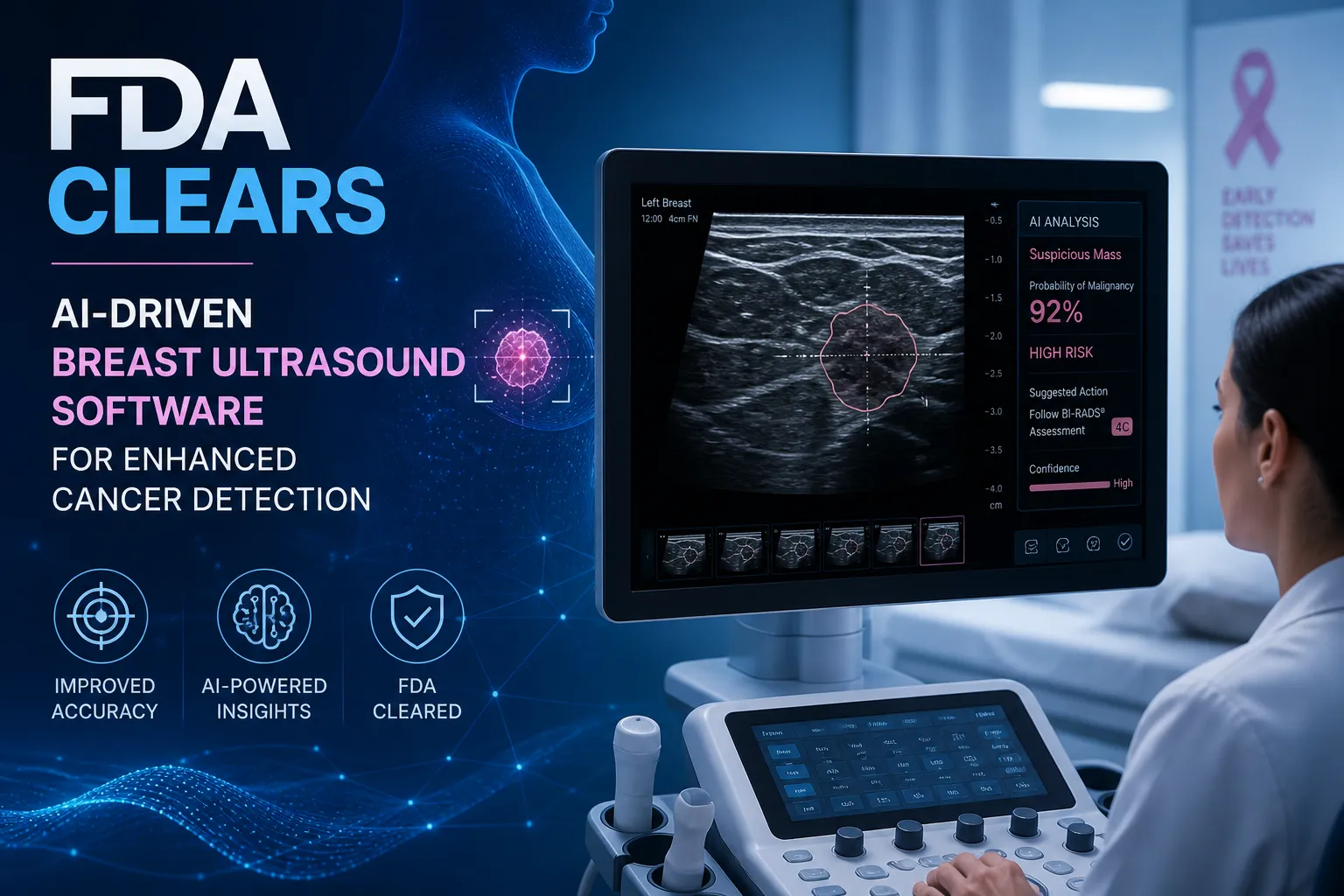
The U.S. Food and Drug Administration (FDA) has recently granted clearance to a groundbreaking AI-powered breast ultrasound software, marking a pivotal moment in the realm of medical imaging. This new technology is designed to significantly enhance the detection of breast cancer, providing a promising tool for radiologists and healthcare professionals.
Revolutionizing Breast Cancer Detection
Breast cancer remains one of the most common cancers among women worldwide. Early detection is crucial for successful treatment outcomes, and the introduction of AI-driven tools aims to improve the accuracy and efficiency of breast cancer screening processes. The newly approved software utilizes advanced algorithms to assist radiologists in identifying potential abnormalities that might be missed by the human eye.
How the Software Works
The AI-powered software integrates seamlessly with existing ultrasound machines, providing real-time analysis during examinations. By analyzing vast amounts of ultrasound data, the software can highlight suspicious areas within the breast tissue, prompting further investigation. This capability is particularly beneficial in dense breast tissue, where traditional methods may fall short.
FDA Approval: A Rigorous Process
The FDA’s clearance of the AI-driven software follows a comprehensive review process. The evaluation included clinical trials and rigorous testing to ensure the software’s safety and efficacy. The approval signifies that the software meets the high standards set by the FDA for medical devices, offering a reliable tool for enhancing breast cancer screening accuracy.
Implications for Healthcare Providers
With FDA clearance, healthcare providers can now incorporate this AI technology into their clinical practice. The software is expected to reduce false negatives and improve diagnostic confidence, which can lead to earlier interventions and better patient outcomes. By augmenting the capabilities of radiologists, the AI-driven tool also aims to reduce the workload of healthcare professionals, allowing them to focus more on patient care.
Challenges and Considerations
While the software presents significant benefits, its integration into clinical settings will require careful consideration. Training and adaptation periods are necessary to ensure that healthcare professionals can effectively utilize the technology. Additionally, the cost of implementing AI tools may pose challenges for smaller clinics or those with limited resources.
Future Prospects
The FDA’s clearance of this AI-driven ultrasound software is a step forward in the ongoing integration of artificial intelligence into healthcare. As technology continues to evolve, we can expect further advancements in AI applications, not only in breast cancer detection but also in other areas of medical imaging. The future holds the potential for AI to play an even more integral role in personalized medicine, where treatments and screenings can be tailored to individual patient needs.
Conclusion
The approval of AI-driven breast ultrasound software represents a significant advancement in the fight against breast cancer. By improving the accuracy and efficiency of cancer detection, this technology offers new hope for patients and healthcare providers alike. As AI continues to transform medical imaging, its impact on early detection and improved patient outcomes will be profound.