A New Era in Life Sciences
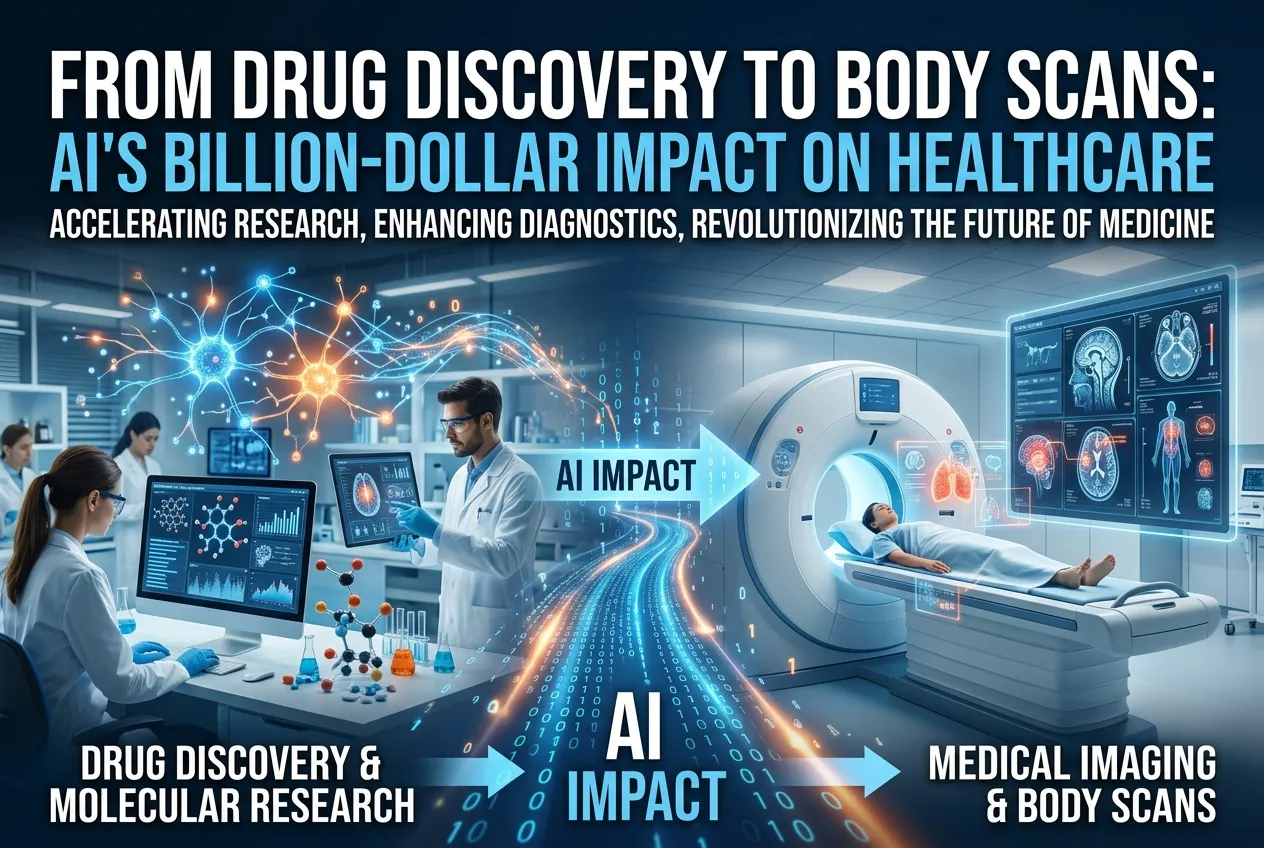
Artificial intelligence is no longer a futuristic concept whispered in research labs; it is a powerful, present-day force actively reshaping entire industries. Nowhere is this transformation more profound or promising than in the life sciences and healthcare sectors. A wave of billion-dollar investments is fundamentally altering how we discover life-saving medicines and how we manage our personal health, signaling a seismic shift from reactive treatment to proactive, data-driven wellness. Two recent, high-profile developments perfectly capture this dual-front revolution: pharmaceutical giant Bristol Myers Squibb is building a state-of-the-art "AI Factory" to supercharge drug discovery, while health-tech innovator Neko Health has secured a staggering $700 million to expand its AI-powered preventative body scanning services.
The 'AI Factory': Supercharging Drug Discovery
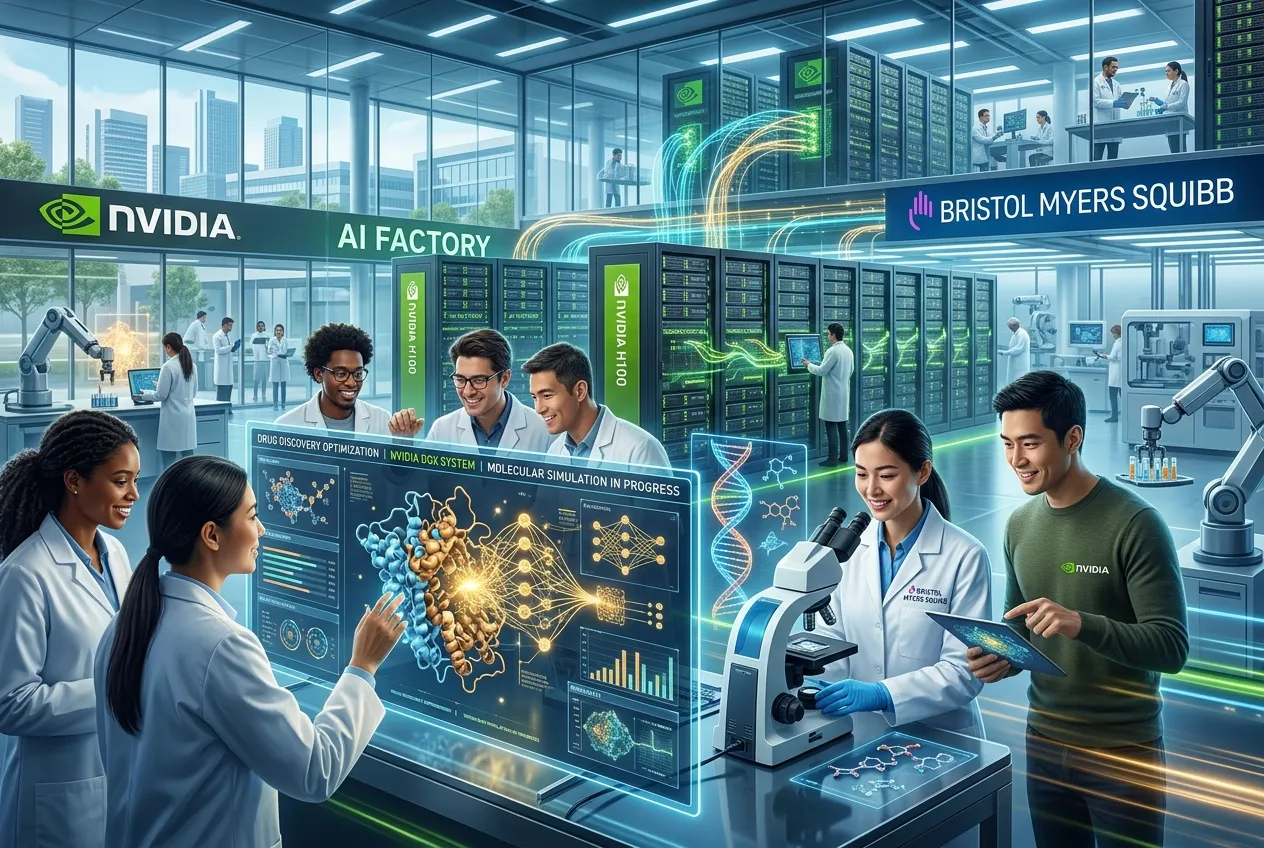
The traditional path of drug discovery is notoriously long, costly, and fraught with failure. It can take more than a decade and billions of dollars to bring a single new drug to market, with countless promising compounds failing along the way. Bristol Myers Squibb is tackling this challenge head-on by investing in an advanced "AI Factory," powered by Nvidia's latest and most powerful computing systems. This isn't just about buying faster computers; it's a strategic overhaul of the research and development process.
An "AI Factory" is a centralized hub of immense computational power, specifically engineered to develop, train, and deploy sophisticated artificial intelligence models at an unprecedented scale. For Bristol Myers Squibb, this means feeding the system vast and complex datasets—from genomic sequences and protein structures to clinical trial results and molecular interaction libraries. The AI can then sift through this data, identifying subtle patterns and correlations that would be impossible for human researchers to detect. This allows scientists to identify promising drug candidates with greater speed and accuracy, predict their potential efficacy and side effects, and gain a deeper understanding of complex disease mechanisms. The implication is a paradigm shift from slow, sequential lab work to a dynamic, iterative process where computational science and traditional biology work in tandem to create novel therapies for some of the world's most challenging diseases.
Preventative Medicine Gets a High-Tech Upgrade
While big pharma uses AI to create new cures, a parallel revolution is happening at the consumer level, focused on prevention. Health tech company Neko Health's recent $700 million funding round is a massive vote of confidence in its mission to make proactive health monitoring accessible. The company offers a comprehensive, non-invasive body scan driven by a powerful AI engine. This isn't your standard check-up.
During a scan, dozens of sensors collect millions of data points across the body, from skin and heart function to respiration and neurological responses. The AI then analyzes this immense dataset to flag potential health risks and abnormalities long before they would manifest as symptoms. This could mean detecting a suspicious mole at its earliest stage or identifying subtle cardiovascular changes that could predict future issues. This technology democratizes preventative medicine, moving it from a luxury service to a scalable platform. By catching health problems early, the approach promises not only to improve patient outcomes and save lives but also to reduce the long-term economic burden on the healthcare system. It empowers individuals with personalized, actionable data, fostering a culture of wellness rather than just sickness management.
The Symbiotic Future of AI in Health
At first glance, accelerating drug research and providing consumer body scans might seem like disparate applications of AI. In reality, they are two sides of the same coin, creating a symbiotic ecosystem for the future of medicine. The advanced therapies developed in AI-powered labs like Bristol Myers Squibb's will be the treatments for the very conditions that AI-powered scanners like Neko Health's can detect at their inception. In the long term, the anonymized data gathered from millions of preventative scans could become an invaluable resource for researchers, fueling the discovery of new biomarkers and therapeutic targets.
The sheer scale of the capital being deployed underscores that this is no fleeting trend. It represents a fundamental belief among investors and industry leaders that AI is the key to unlocking the next generation of healthcare. However, the path forward is not without its challenges. Issues of data privacy, regulatory approval for new AI-driven diagnostics, and the potential for algorithmic bias must be carefully navigated to ensure these powerful technologies are deployed safely, ethically, and equitably. Despite these hurdles, the direction is clear. The billion-dollar bets being placed today are paving the way for a future where medicine is more predictive, personalized, and profoundly more effective.