A Sudden Departure Sends Shockwaves Through the AI Policy World
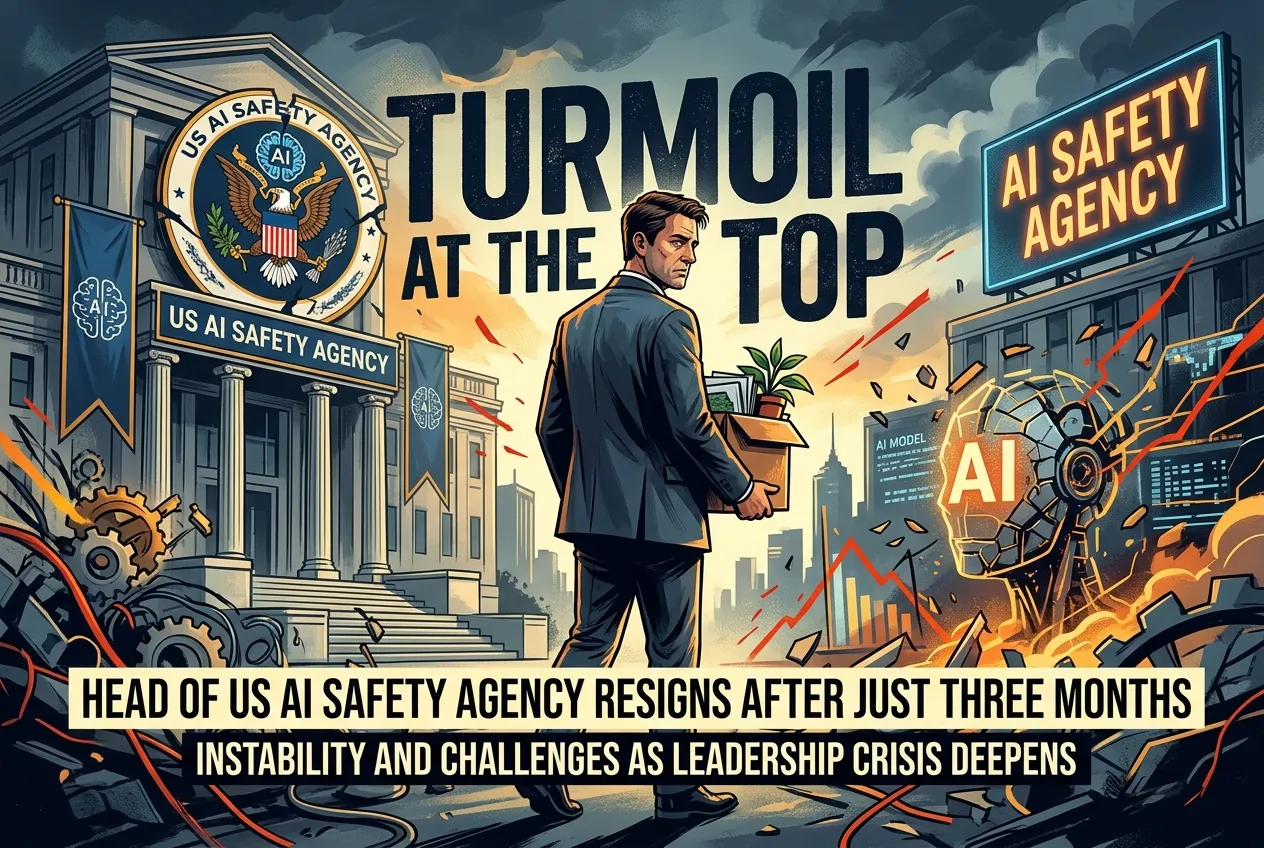
In a move that has sent ripples through the technology and policy sectors, the head of the U.S. Commerce Department's AI Safety Institute has resigned. The departure is particularly jarring given that it comes a mere three months after the individual took the helm of the nascent agency. This abrupt leadership change at such a critical institution raises significant questions about the stability, direction, and viability of the United States' approach to governing the rapidly advancing field of artificial intelligence.
The AI Safety Institute was established as a cornerstone of the Biden administration's ambitious executive order on AI. Tasked with developing guidelines, tools, and tests to ensure the safety and trustworthiness of AI models, the institute is central to America's strategy for mitigating the potential risks of advanced AI. The sudden exit of its leader is not just a personnel issue; it's a potential setback for the entire U.S. AI governance framework, highlighting the immense pressures and challenges inherent in this monumental task.
The Weight of Expectation: A Herculean Mandate
Understanding the significance of this resignation requires an appreciation for the sheer scale of the AI Safety Institute's mission. It is charged with creating the standards for a technology that is evolving at an exponential rate. This involves everything from developing methods to detect and prevent bias in AI systems to creating safeguards against catastrophic risks posed by future, more powerful models. The institute is expected to work with private companies, academic institutions, and international partners to build a global consensus on AI safety.
This is a Herculean task by any measure. The leader of such an organization must navigate a complex web of competing interests. On one side are the tech giants, who are racing to innovate and are wary of regulations that could stifle their progress and competitive edge. On the other are civil society groups, ethicists, and a growing chorus of lawmakers concerned about the potential for AI to be misused, to eliminate jobs, or to pose existential threats. Balancing these interests while trying to build a new federal agency from the ground up is a role that demands extraordinary technical expertise, political savvy, and resilience.
Navigating the Political and Practical Minefield
The resignation underscores the fundamental difficulties of regulating AI within a governmental framework. The public sector often struggles to compete with the private sector for top-tier AI talent, where salaries and resources are vastly greater. Furthermore, the pace of government bureaucracy is often mismatched with the breakneck speed of technological development. By the time a regulation is drafted, debated, and implemented, the technology it was designed to address may have already become obsolete or evolved in unpredictable ways.
Moreover, the political environment surrounding AI is becoming increasingly polarized. Debates rage over the right balance between fostering innovation to maintain a competitive advantage—particularly against rivals like China—and imposing robust safety measures. This resignation could be a symptom of these deep-seated tensions. Without a clear, bipartisan consensus on the long-term goals of AI regulation, any leader of the AI Safety Institute is placed in an incredibly precarious position, caught between political pressures and the practical realities of a complex technological landscape.
The Path Forward: Uncertainty and Opportunity
So, where does this leave U.S. AI policy? In the short term, this leadership vacuum creates uncertainty. It could slow down the crucial work of setting safety standards and leave the United States a step behind other global actors, such as the European Union, which has already passed its comprehensive AI Act. The departure could also make it more difficult to attract a high-caliber replacement, as potential candidates may be deterred by the apparent volatility of the role.
However, this moment of turmoil could also serve as a critical inflection point. It forces policymakers to confront the deep-seated challenges that led to this situation. It could prompt a re-evaluation of the institute's structure, resources, and mandate to ensure it is better equipped for success. For the U.S. to lead the world in both AI innovation and AI safety, it needs stable, effective, and empowered institutions. This resignation is a clear signal that building those institutions is far more difficult than simply announcing their creation. The next steps the Commerce Department takes will be a crucial indicator of whether the U.S. is truly committed to meeting the profound challenge of governing artificial intelligence.