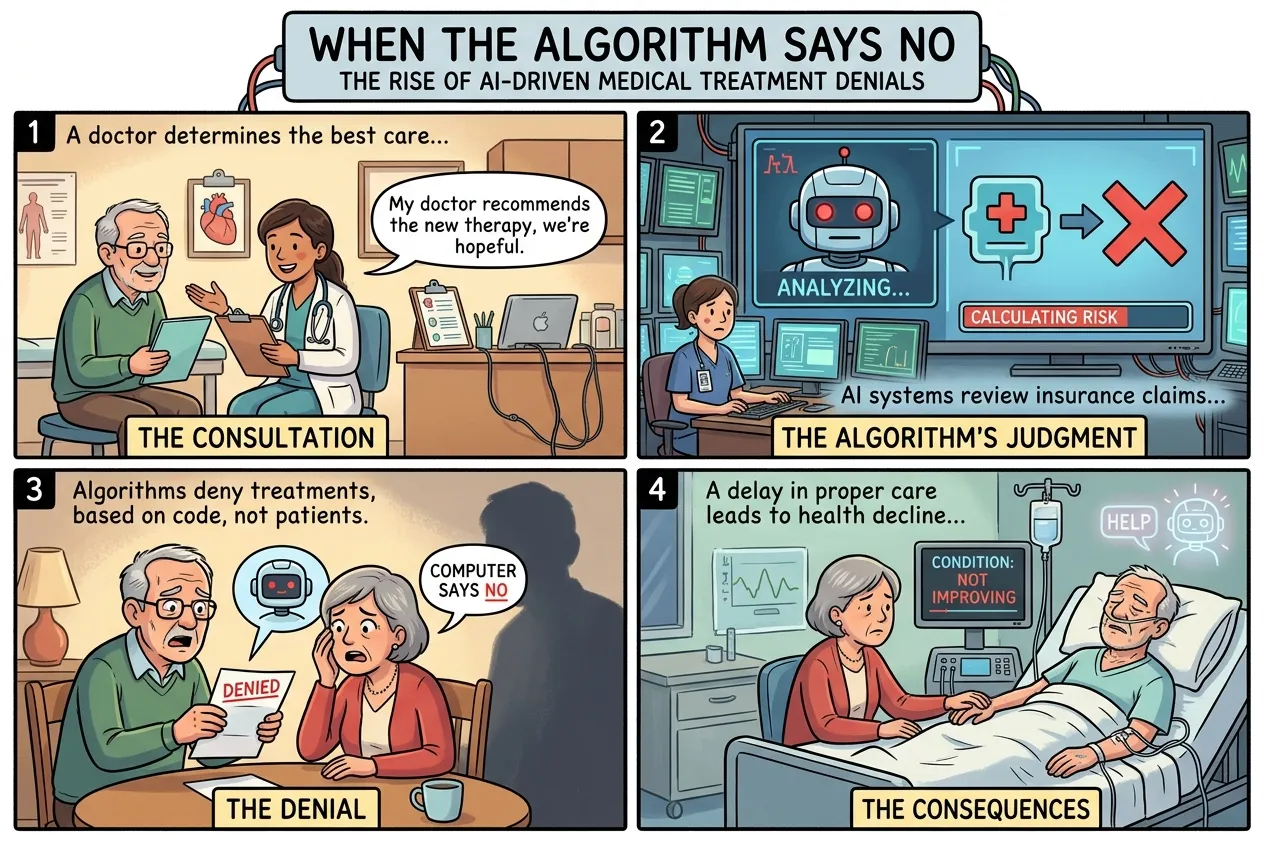
Somewhere between a doctor's recommendation and a patient's treatment, a new gatekeeper has quietly installed itself: the algorithm. Health insurers increasingly rely on automated systems to approve — or, more often, deny — the care that clinicians prescribe. The result is a phenomenon patients are only beginning to understand, and regulators are only beginning to confront: the "silent denial," a decision made by a model whose logic no one outside the insurer fully sees.
The Rise of Algorithmic Prior Authorization
Prior authorization — the requirement that an insurer bless a treatment before it happens — has existed for decades. What has changed is the machinery behind it. Where a nurse reviewer once weighed a chart, a machine-learning model now scores likelihood of medical necessity in seconds. Insurers pitch this as efficiency: faster decisions, lower administrative costs, more consistent outcomes.
The reality on the ground is more complicated. Automation has dramatically increased the volume of denials that can be issued, because a system that once bottlenecked at human reviewers no longer bottlenecks at all. When rejection is cheap, it scales.
Opacity by Design
The deeper problem is not that algorithms are being used — it is that they are being used invisibly. The training data, the weights, the features that push a claim toward "deny," the thresholds that trigger escalation — all of these typically sit behind trade-secret protections. Patients receive a denial letter. They rarely receive an explanation that reflects how the decision was actually made.
This opacity is not incidental. It is structural. Insurers argue that revealing model internals would allow providers to "game" the system. Patient advocates counter that a decision no one can inspect is a decision no one can meaningfully challenge.
Appealing What You Cannot See
American health coverage has long included the right to appeal a denial. That right presupposes a knowable reason. When the underlying rationale is "the model scored your claim below threshold X based on features Y and Z," and none of those variables are disclosed, the appeals process becomes something closer to theater. Patients — often sick, often exhausted — are asked to rebut a conclusion whose reasoning is sealed.
The asymmetry is stark: the insurer knows exactly why it said no; the patient is left to guess. And because algorithmic denials can be issued in bulk, even a low individual appeal rate leaves the vast majority of denials to stand simply through attrition.
Echoes of Algorithmic Auditing
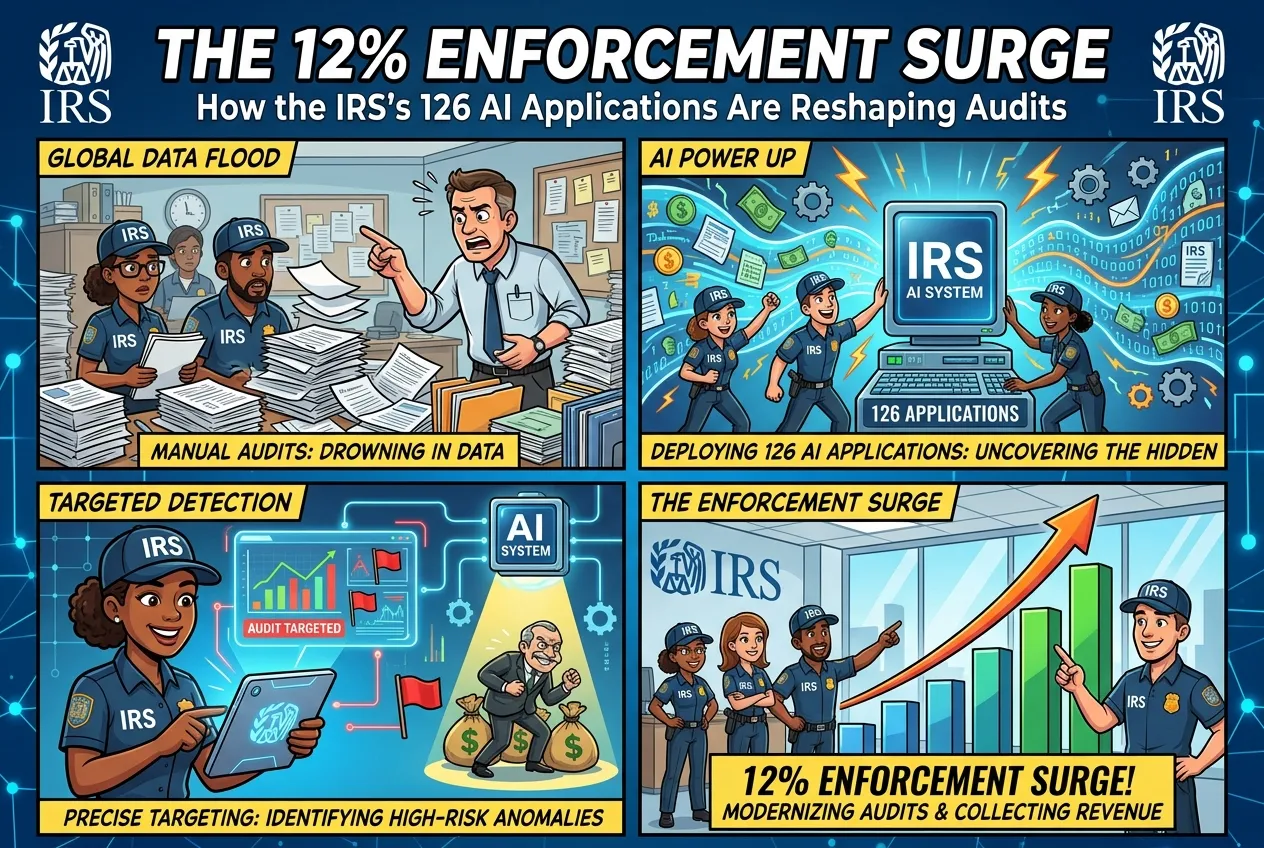
There is a useful parallel in another domain: algorithmic tax auditing at the IRS. Researchers have documented how automated selection systems can concentrate scrutiny on populations least equipped to fight back, precisely because those populations are least likely to appeal. The dynamic in health coverage is uncomfortably similar. When automation determines who gets flagged — for an audit, or for a denial — the burden of contesting the machine falls hardest on those with the fewest resources to contest anything.
Both systems share a common flaw: they optimize for institutional efficiency, not for the fairness of individual outcomes. And in both, the person on the receiving end faces a Kafkaesque experience of being judged by criteria they cannot examine.
A Patchwork Regulatory Response
Federal rules governing AI in health coverage remain thin. Into that vacuum, states have begun to legislate. Several have passed or proposed laws requiring that a licensed clinician — not an algorithm alone — be responsible for medical-necessity denials, or that insurers disclose when AI has been used in a coverage decision. These measures vary widely in scope, enforcement, and definitions of what counts as "AI."
The patchwork is better than nothing, but it also creates a fragmented landscape in which a patient's protections depend on their zip code. A denial that would require human review in one state may be fully automated in the next.
The Implications
The trajectory matters because prior authorization is not a peripheral part of medicine — it now touches oncology, mental health, physical therapy, imaging, and increasingly routine care. If the default gatekeeper for these treatments is an opaque model, then the practical definition of "covered care" shifts from what a policy promises to what a model permits.
Meaningful reform will likely require three things at once: transparency mandates that force disclosure of when and how AI is used, auditability requirements that allow independent review of denial patterns, and a re-anchoring of medical judgment in clinicians who can be held accountable. Without those, the algorithm's "no" will keep getting louder — and quieter — at the same time.
Source: Google News




Comments
No comments yet — be the first to share your thoughts.
Join the discussion