A Paradigm Shift in Motion
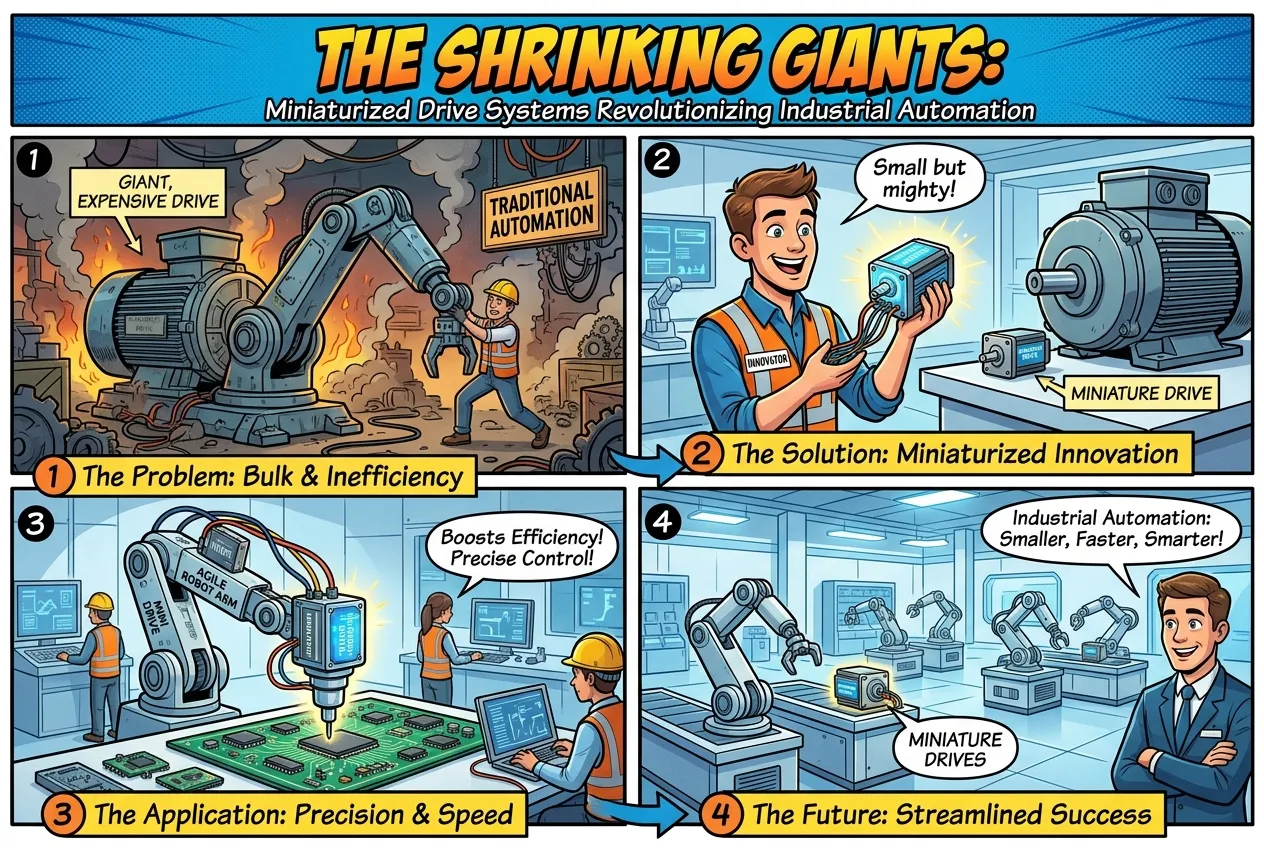
The classic image of industrial automation often conjures visions of colossal robotic arms and sprawling, noisy machinery. While large-scale systems remain crucial, a quieter, more profound revolution is happening at the micro-level. The unsung heroes of this transformation are miniaturized drive systems—incredibly compact motors, controllers, and gearboxes that pack astonishing power and precision into minuscule packages. This trend isn't just about making things smaller; it's about fundamentally rethinking what's possible in robotics, manufacturing, and beyond. As noted by industry analysts at AutomationNews.com, the push towards miniaturization is a key driver of innovation, enabling automation to penetrate markets and applications once thought impossible.
The Engineering Challenge: More Power, Less Space
Shrinking a drive system is far more complex than simply scaling down a larger design. Engineers face a constant battle against the laws of physics. The primary challenge is thermal management. As components get smaller, the surface area available to dissipate heat decreases much faster than the volume that generates it. Overheating can lead to component failure, reduced efficiency, and inaccurate performance. Overcoming this requires a multi-faceted approach, starting with advanced material science. The use of rare-earth magnets with higher energy densities, sophisticated alloys for gearing, and advanced polymers for insulation allows for more power in a smaller thermal footprint.
Furthermore, integration is key. Modern miniaturized drives are not just tiny motors; they are often highly integrated mechatronic systems. This means the motor, encoder, drive electronics, and even the controller logic are combined into a single, compact unit. This eliminates the need for bulky external controller cabinets and extensive wiring, saving precious space and reducing potential points of failure. The development of more efficient semiconductors, such as Gallium Nitride (GaN), allows for smaller, faster-switching electronics that generate less waste heat, further easing the thermal management burden.
The Triple Crown of Benefits: Space, Efficiency, and Precision
The relentless pursuit of miniaturization yields a powerful trifecta of advantages that are reshaping factory floors and product design.
Space-Saving: The most immediate benefit is the dramatic reduction in machine footprint. With smaller drives, equipment can be designed to be more compact, allowing for higher-density production lines. This is critical in high-cost environments like cleanrooms for semiconductor manufacturing. It also enables the development of portable, desktop-sized automation systems and complex robotic end-effectors (the 'hands' of a robot) that can perform multiple tasks without being bulky.
Energy Efficiency: Smaller systems are inherently more energy-efficient. They require less power to operate, and their reduced mass means less energy is wasted accelerating and decelerating components. When scaled across a factory with thousands of motors, this translates into significant operational cost savings and a reduced carbon footprint—a crucial factor in today's sustainability-focused economy. The lower heat output also reduces the load on facility-wide HVAC and cooling systems.
Unprecedented Precision: In the world of automation, control is everything. Miniaturized drives offer superior precision due to their low inertia. Smaller moving parts can start, stop, and change direction with incredible speed and minimal overshoot, allowing for positioning accuracy measured in microns or even nanometers. This level of fine motor control is the enabling technology behind the assembly of microscopic electronics and the delicate maneuvers of surgical robots.
Real-World Revolutions: Applications Unleashed
The impact of miniaturized drive systems is being felt across numerous high-tech industries.
In medical technology, they are the power behind the latest generation of surgical robots, where tiny instruments must perform delicate procedures inside the human body with flawless precision. They also drive advanced prosthetics, making them lighter and more responsive, and power the high-throughput robots used in lab automation for drug discovery and diagnostics.
Electronics manufacturing would be impossible without them. From the robotic arms that place microscopic components onto a smartphone's logic board to the systems that grind and polish camera lenses with sub-micron accuracy, tiny, powerful drives are essential. They provide the speed and precision needed to produce the complex devices we rely on every day.
Even in aerospace and logistics, the benefits are clear. Compact actuators adjust satellite components in the vacuum of space, while in modern warehouses, fleets of autonomous mobile robots (AMRs) use integrated drive systems to navigate tight aisles and optimize the flow of goods.
The Future is Small
The journey of miniaturization is far from over. The next wave of innovation will likely involve even greater integration, with the potential for 'motor-on-a-chip' solutions and the use of AI to predictively manage performance and maintenance in these tiny systems. The big story in automation is no longer about building bigger, but about thinking smaller. The shrinking giants of the drive world are proving that the most significant breakthroughs often come in the smallest packages.



Comments
No comments yet — be the first to share your thoughts.
Join the discussion