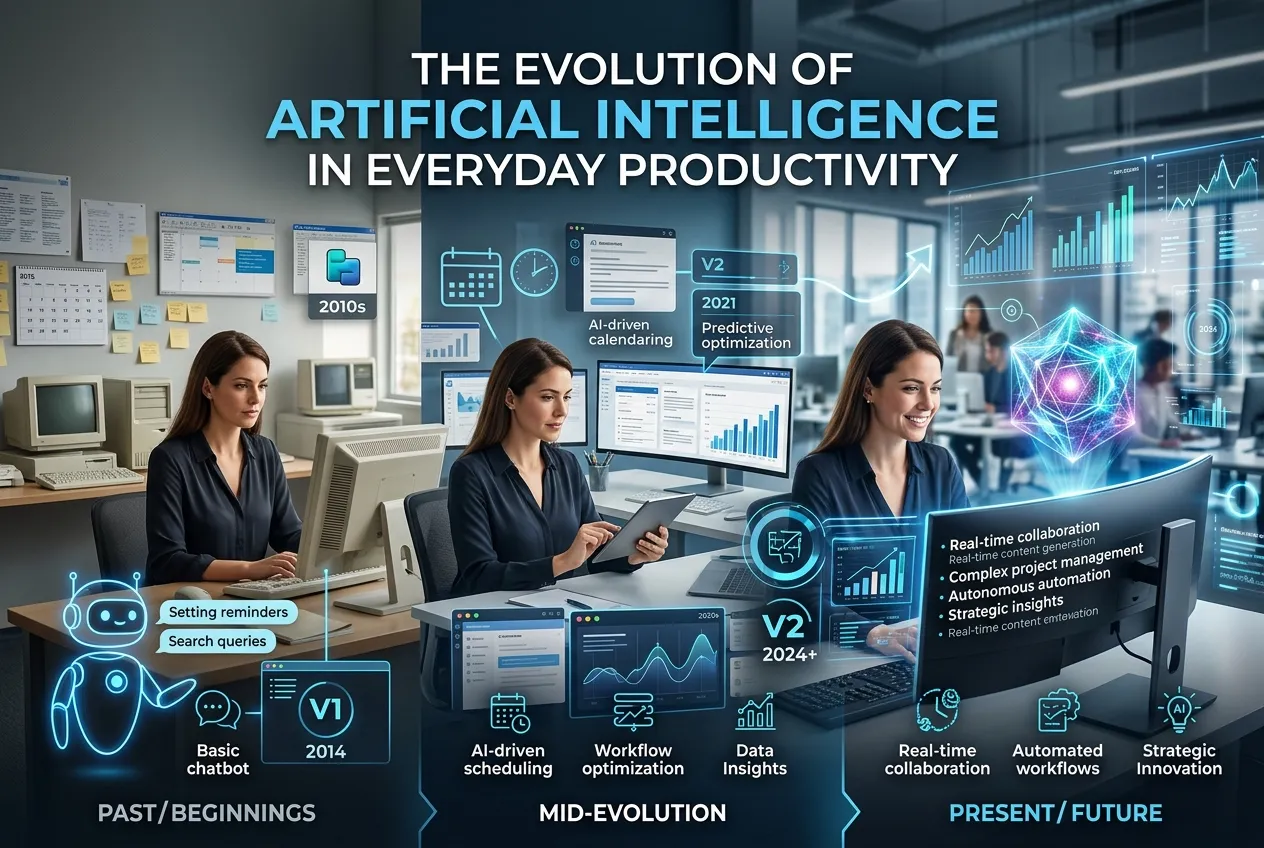
The landscape of professional productivity has undergone a massive transformation. Just a few years ago, leveraging artificial intelligence required deliberate effort: opening a specific application, crafting the perfect prompt, and meticulously refining the output. Today, as we navigate the complexities of modern workflows, that paradigm has shifted entirely. Artificial intelligence is no longer a separate destination or a standalone tool; it has become an invisible, ambient layer woven directly into the fabric of our daily digital experiences. This evolution from active prompting to seamless integration represents one of the most significant leaps in workplace efficiency. By understanding how these systems operate behind the scenes, professionals can better harness their capabilities, streamline their tasks, and focus their energy on high-level strategic thinking rather than routine execution.
The Shift from Active Prompting to Ambient Assistance
The defining characteristic of current productivity tools is their transition toward ambient computing. In the past, users had to explicitly tell algorithms what to do. Now, these systems are designed to anticipate needs based on rich contextual clues. When you open a document, the software already understands the project you are working on, the emails you have recently exchanged regarding the topic, and the impending deadlines on your calendar.
This ambient assistance means that the barrier to entry for utilizing advanced algorithms has effectively dropped to zero. You do not need to be a prompt engineer to benefit from automated summaries or data synthesis. The technology quietly operates in the background, offering intelligent suggestions, auto-completing complex formulas in spreadsheets, and surfacing relevant files before you even realize you need them. This seamless integration drastically reduces cognitive load. Instead of constantly context-switching between different applications and search bars, users can maintain their flow state, trusting that the underlying infrastructure will support their immediate needs.
Practical Analysis: Integrating Smart Algorithms into Core Workflows
To truly grasp the impact of this technological shift, we must look at how it integrates into core, everyday workflows. Consider the lifecycle of a standard project. At the inception phase, algorithms assist by aggregating historical data, summarizing past project retrospectives, and generating baseline outlines. This eliminates the dreaded blank page syndrome that often stalls creative and strategic momentum.
During the execution phase, the practical application of these tools becomes even more apparent. Routine communications are drafted with contextual awareness, ensuring tone and formatting align with the user's typical style. In data analysis, what once required complex query languages can now be accomplished through natural language interactions. The system identifies trends, flags anomalies, and generates visualizations automatically. Furthermore, scheduling and resource allocation are optimized dynamically. If a key team member is delayed, the system can automatically suggest adjusted timelines and notify stakeholders, turning a logistical headache into a minor, automated adjustment.
Implications for the Modern Workforce
The widespread integration of these ambient systems carries profound implications for the modern workforce. As routine execution becomes increasingly automated, the value of human labor is shifting rapidly toward strategic oversight, critical thinking, and emotional intelligence. The premium is no longer on how fast someone can generate a report, but on how well they can interpret the findings and apply them to complex business challenges.
This shift requires a fundamental realignment of professional skills. Workers must transition from being creators of raw content to acting as editors and curators of machine-generated output. This necessitates a deep understanding of the subject matter to accurately evaluate the quality and accuracy of the information provided by the algorithms. Furthermore, as the execution of tasks becomes commoditized, interpersonal skills—such as leadership, empathy, and the ability to build consensus among diverse teams—will emerge as the primary differentiators for career advancement. Organizations must recognize this shift and invest in training that fosters these uniquely human capabilities.
Overcoming the Friction of Adoption and Privacy Concerns
Despite the clear advantages, the journey toward fully integrated workflows is not without friction. One of the primary hurdles is the establishment of trust. Users must feel confident that the systems operating in the background are accurate, unbiased, and reliable. When algorithms make suggestions or automate processes, there must be a clear mechanism for human review and intervention.
Equally important is the issue of data privacy and security. For ambient assistance to function effectively, it requires access to a vast amount of personal and corporate data, including emails, messages, and proprietary documents. Organizations must implement robust governance frameworks to ensure this data is handled responsibly. This includes strict access controls, transparent data usage policies, and the ability for users to easily opt-out of certain data collection practices. Without these safeguards in place, the potential for efficiency gains will be overshadowed by security risks and a lack of user trust.
Short Takeaways for Future-Proofing Your Work
Adapting to this new era of productivity requires a proactive approach. Here are the key takeaways for professionals looking to thrive:
- Embrace the role of the editor: Spend less time generating raw text or data and more time refining, fact-checking, and aligning the output with your strategic goals.
- Focus on context: The better you organize your digital workspace and the clearer your communication, the more effectively ambient systems can assist you.
- Prioritize uniquely human skills: Invest in developing your emotional intelligence, complex problem-solving abilities, and cross-functional collaboration.
- Stay informed about data governance: Understand how your tools use your data and advocate for responsible, transparent practices within your organization.


Comments
No comments yet — be the first to share your thoughts.
Join the discussion