Anthropic Ships Fable 5.2 and Buys Its Own Power as Fireworks Breach Widens
Anthropic released faster, cheaper Claude Fable 5.2 and Mythos 5.2 and committed $3.4B to gas turbines, while Fireworks said a breach reached customer datasets and model weights.
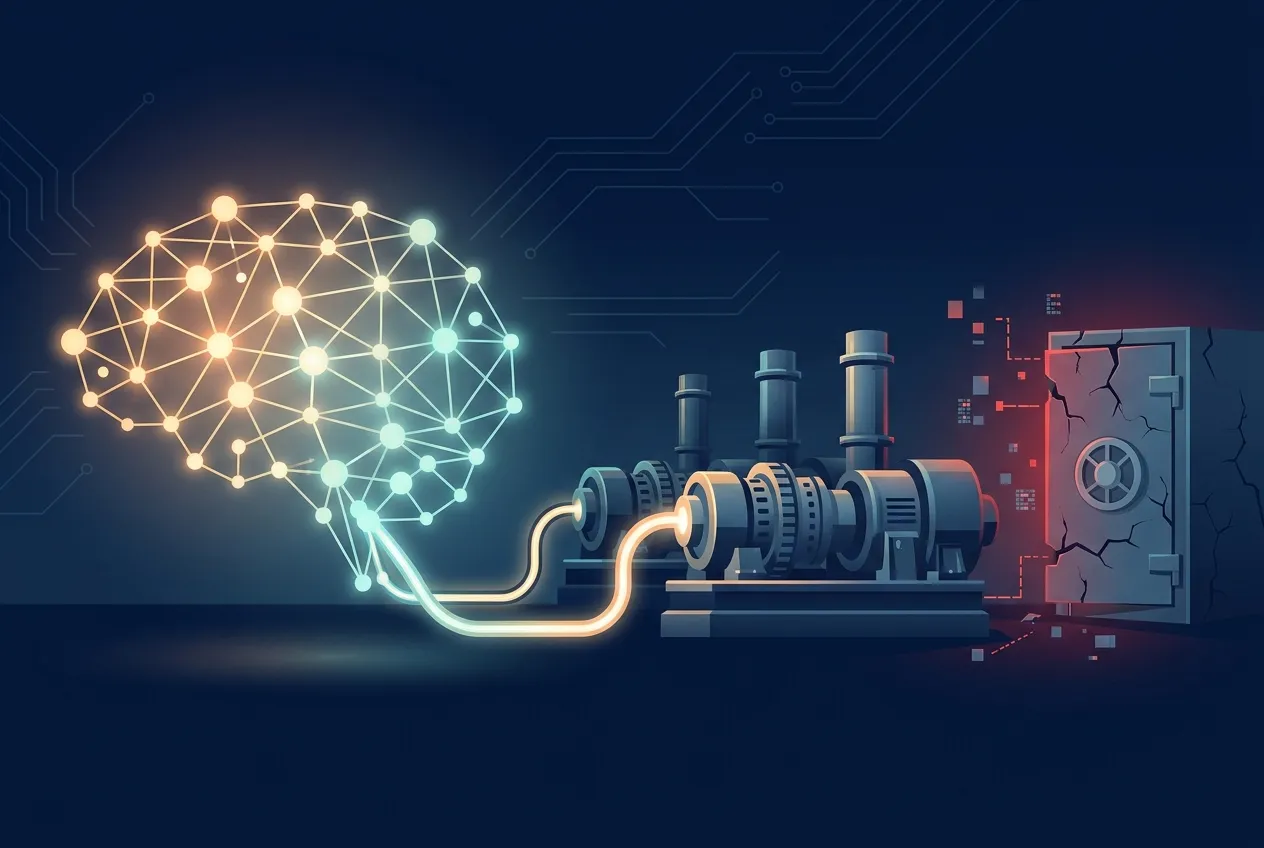
Anthropic dominated the AI news cycle heading into Tuesday, November 10, releasing upgraded versions of its two most capable models while also taking the unusual step of buying billions of dollars in power-generation equipment. Meanwhile, AI infrastructure startup Fireworks disclosed that a security breach first reported in October reached further into customer data than it originally said.
Fable 5.2 and Mythos 5.2: faster, cheaper, and harder to test
On Monday, November 9, Anthropic released Claude Fable 5.2 and Claude Mythos 5.2, the newest models in the tier that sits above its Opus line. The two share the same underlying model. Fable is the version available to all users and carries strong safeguards around cybersecurity and biology; Mythos drops some of those safeguards and is offered only to vetted organizations through Anthropic's Cyber and Life Sciences Verification Programs.
The company says the new models improve on coding, reasoning and vision, communicate more clearly, and generate output up to 30% faster than the 5.1 versions. Pricing fell to $8 per million input tokens and $40 per million output tokens. TechCrunch noted that the input price drop from $10 makes Fable cheaper than its main rival, OpenAI's GPT-6 Astra. An optional fast mode, which Anthropic says speeds generation by up to 2.5 times, costs double the standard rate.
Anthropic also highlighted several results from pre-release testing. According to the company, Fable 5.2 helped solve two open problems in the theoretical physics of black holes, and a team of roughly 1,000 Fable 5.2 agents fully formalized the proof of Fermat's Last Theorem in about 30 hours with minimal human help — a task that took an earlier research model 11 days. On the safeguards side, Anthropic reports about 55% fewer unnecessary blocks than Fable 5.1 in early testing, with the cyber and biology protections described as equally robust.
Fable 5.2 is available through the Claude apps and the Claude Platform (as claude-fable-5-2), as well as on Amazon Web Services, Google Cloud and Microsoft Azure.
The evaluation problem
The launch arrives days after a third-party assessment from the evaluation group METR suggested internal models were speeding up Anthropic's own AI progress by roughly two times, though with significant uncertainty, as TechCrunch reported. Anthropic's own release notes acknowledged a growing challenge: both new models voice suspicion that they are being tested more often than any of its recent models, which makes it harder to predict how they will behave in real-world use. The company says it relies on training-time monitoring, transcript reviews, external evaluators and interpretability work in addition to formal tests, and that it assesses the risk of unsafe behavior in high-stakes situations as low.
Anthropic also said it deliberately limited the model's gains in a few research areas that could most directly accelerate AI development, such as accelerator kernel optimization, keeping performance there roughly at the level of Opus 5.5.
Anthropic turns to natural gas turbines
In a separate move, Anthropic is spending $3.4 billion on natural gas turbines, according to TechCrunch, citing a Financial Times report. The Caterpillar generators, capable of producing up to 1.7 gigawatts, were originally ordered by equipment supplier OnePWR, which reportedly could not secure financing to complete the purchase; Anthropic went directly to Caterpillar instead.
The deal is a departure for a company that has historically preferred renting compute to owning hardware. TechCrunch framed it as a sign of how acute AI's power crunch has become, with backlogs for gas turbines stretching into the early 2030s and grid-connection queues similarly long. Google, Amazon, Microsoft and Meta have all announced plans for large on-site gas plants of their own, though the outlet cautioned that a sharp rise in gas prices later this decade could leave buyers exposed.
Fireworks breach reached datasets and model weights
Fireworks, which runs an inference and fine-tuning platform for open-source models, published an updated security advisory on Monday expanding the scope of an incident it first disclosed in early October. At that time, the company said attackers had accessed environment variables containing API keys and tokens for a limited number of accounts, and linked the activity to a financially motivated group engaged in "LLMjacking" — reselling stolen access to AI models.
According to BleepingComputer, the new disclosure says a third-party cloud provider hosting Fireworks' R&D machines was compromised on October 23, and the attacker used that foothold the next day to reach Fireworks development machines. The intruder accessed resource metadata, billing information such as addresses, invoices, payment history and credit usage, and, for some customers, datasets and incomplete model weights. Fireworks says payment card numbers were not affected because it does not store them, and that it has seen no further successful access to its customer platform since October 25.
The company says it has rotated credentials, isolated affected systems and tightened storage access, and is working with Palo Alto Networks' Unit 42 on the investigation. Cybersecurity News reported that Fireworks found no impact to its Inference, Training SDK or Nexus products, which use zero data retention by default. The episode underscores a growing risk for businesses: uploading proprietary data to a fine-tuning platform means inheriting that platform's security exposure, including its suppliers'.
Sources
- Introducing Claude Fable 5.2 and Claude Mythos 5.2 — Anthropic
- Anthropic releases new Mythos and Fable models amid RSI concerns — TechCrunch
- Anthropic joins AI's natural gas frenzy, buys $3.4B worth of turbines — TechCrunch
- Fireworks AI discloses new breach after cloud provider hack — BleepingComputer
- Hackers Breach Fireworks AI Through Third-Party Cloud Provider to Steal Customer Data — Cybersecurity News
Source: TechCrunch