A Troubling Trend in the Modern Workplace
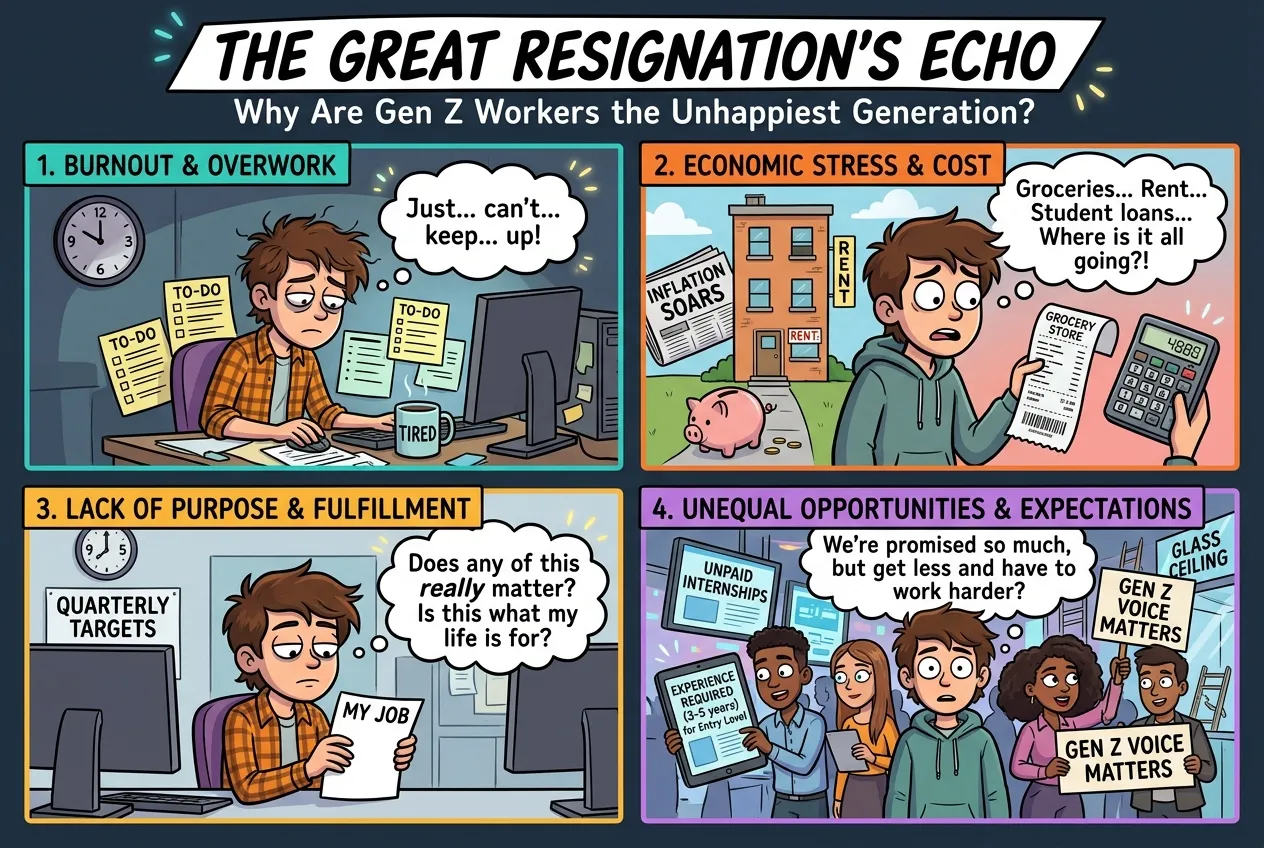
The dust from the Great Resignation has barely settled, yet a new and unsettling trend is emerging, centered on the youngest members of the workforce. Generation Z, the digital natives who entered the professional world with high expectations and a fresh perspective, are now reporting the lowest levels of job satisfaction and the highest levels of stress. Recent data paints a stark picture: a generation poised to redefine work is instead feeling profoundly let down by it. This isn't just youthful angst; it's a systemic issue that reveals a deep disconnect between the expectations of Gen Z and the realities of their employment, creating an echo of the widespread dissatisfaction that fueled their predecessors' mass exodus.
The Data Doesn't Lie: A Generation Under Duress
Surveys and studies consistently highlight Gen Z's struggle. According to a recent comprehensive report, a staggering low of only 49% of Gen Z employees report feeling happy at work. This figure stands in sharp contrast to the 55% of millennials, 57% of Gen X, and 63% of baby boomers who find contentment in their jobs. The data reveals a clear generational decline in workplace happiness, with the youngest cohort feeling the most significant strain. They are not only the least happy but also the most stressed, a combination that fuels burnout and high turnover rates. This unhappiness isn't abstract; it's rooted in tangible, day-to-day work conditions that disproportionately affect them.
Unpacking the Primary Driver: The Instability of the Schedule
While discussions about Gen Z's workplace woes often touch on a desire for purpose or a clash with corporate culture, the primary driver identified by research is far more fundamental: a lack of control over their work schedules. Gen Z workers are reportedly twice as likely as any other generation to face unpredictable hours, work demanding split shifts, or be subjected to the exhausting practice of "clopening"—closing a business late at night only to return a few hours later to open it. This scheduling chaos is particularly prevalent in the retail and hospitality sectors, where many Gen Z members find their first footing in the professional world.
This constant uncertainty wreaks havoc on their ability to build a life outside of work. It disrupts sleep patterns, makes social planning nearly impossible, and contributes to a persistent state of anxiety. The promise of "flexibility," a buzzword often used by employers, has morphed into a reality of instability for these employees. While a salaried professional might interpret flexibility as the ability to work from home, for an hourly Gen Z worker, it often means being on-call and at the mercy of a manager's last-minute scheduling decisions. This isn't the empowering flexibility they were led to expect; it's a precarious existence that undermines their well-being.
Expectation vs. Reality: A Generational Disconnect
Gen Z entered the workforce shaped by a different world than their predecessors. They witnessed the financial anxieties of their Millennial parents and older siblings and grew up in an era of digital transparency and social advocacy. They were told to pursue their passions and demand a healthy work-life balance. Yet, the reality they've encountered is often one of low-paying, entry-level jobs with little autonomy. The popular "lazy girl job" trend on social media is often misinterpreted as a desire to do less work. In reality, it reflects a deep yearning for a job that offers stability, reasonable hours, and low stress—a baseline of security that feels increasingly out of reach.
Compared to Millennials, who entered the workforce in the shadow of the 2008 recession and often felt grateful just to have a job, Gen Z has a different set of priorities. They are less willing to sacrifice their mental and physical health for a paycheck. This isn't a sign of a poor work ethic; it's a rational response to a system that often fails to provide the basic stability needed to thrive. While Millennials have had more time to climb the career ladder and gain the leverage needed to negotiate for true flexibility, Gen Z remains largely in roles where they have little power to effect change.
The Path Forward for Employers
Ignoring the dissatisfaction of the youngest generation is a surefire path to a perpetual staffing crisis. To attract and, more importantly, retain Gen Z talent, employers must look beyond surface-level perks. The solution begins with addressing the core issue: scheduling. Providing predictable, stable hours is the first and most critical step. Investing in scheduling software that allows employees to swap shifts easily and gives them more advance notice can make a significant difference. Furthermore, companies need to foster a culture that genuinely respects employees' time and well-being. This means training managers to be more empathetic, providing clear paths for career advancement, and offering compensation that keeps pace with the cost of living. Ultimately, Gen Z is not asking for the world; they are asking for a stable foundation upon which to build a career and a life. The employers who listen will be the ones who succeed in the future of work.
4 comments
Join the discussion