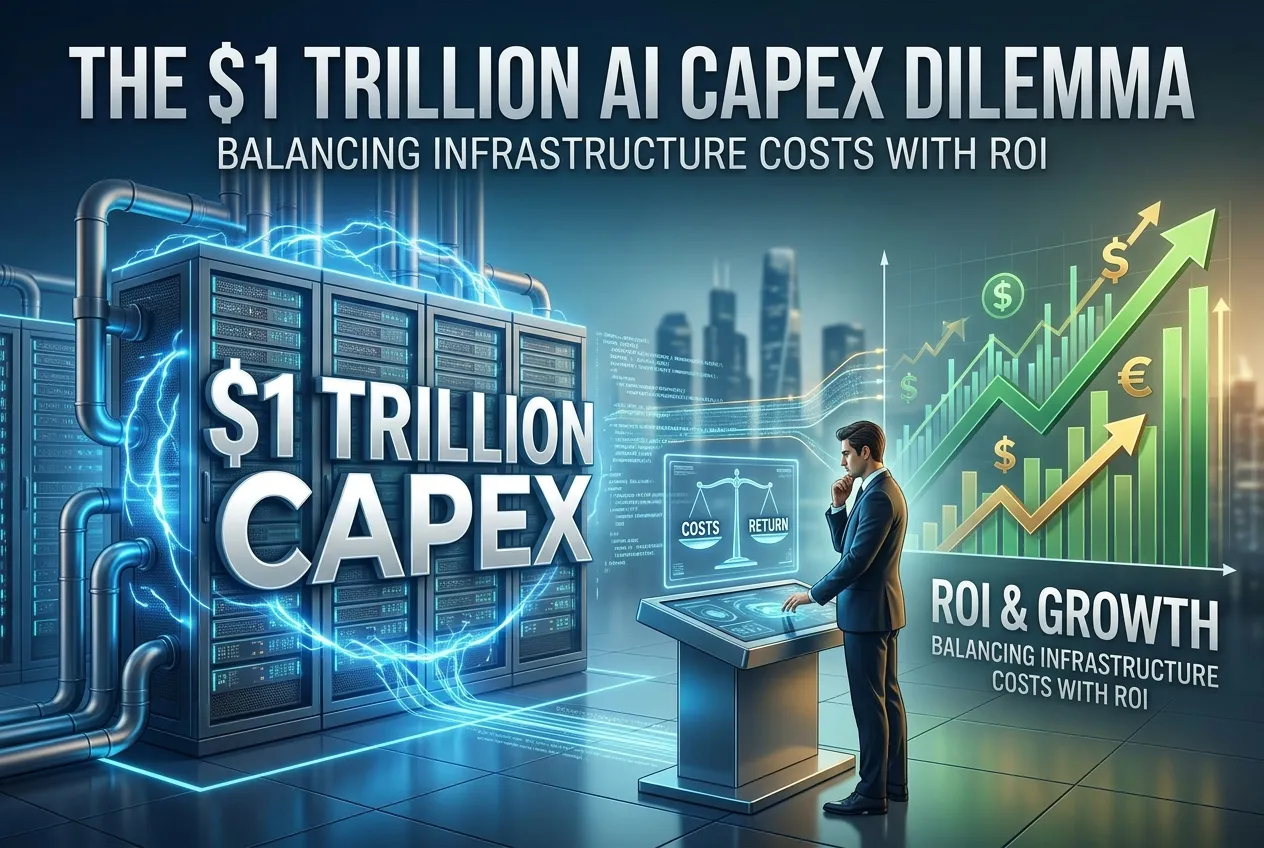
The artificial intelligence revolution has moved from the realm of science fiction into the boardrooms of the world's most powerful corporations. However, as the initial euphoria settles, a stark financial reality is taking center stage. We are witnessing one of the most aggressive capital expenditure cycles in modern economic history. With industry titans and financial leaders sounding the alarm on the sheer scale of investment required, a critical question is emerging among investors: when will the massive capital expenditures required for AI infrastructure actually deliver a proportional return on investment? This is the core of the AI CapEx dilemma, a financial tightrope walk that could define the next decade of technological and economic growth.
Jamie Dimon's $1 Trillion Prediction
At the forefront of this conversation is JPMorgan Chase CEO Jamie Dimon, who recently made a staggering prediction regarding the future of artificial intelligence investment. Dimon projects that AI spending could reach a monumental $1 trillion next year. To put this figure into perspective, it rivals the gross domestic product of entire nations and represents a tectonic shift in global capital allocation.
This trillion-dollar figure is not simply going toward software development; it is heavily weighted toward physical and digital infrastructure. We are talking about the construction of massive, energy-intensive data centers, the procurement of highly specialized and expensive graphics processing units (GPUs), and the modernization of power grids required to keep these facilities running without interruption. Dimon's prediction underscores the belief that AI is not just another tech trend, but a foundational shift akin to the industrial revolution. However, a price tag of $1 trillion in a single year forces the market to confront the immense financial burden of building this new foundational layer.
Wall Street's Growing CapEx Anxiety
Unsurprisingly, this level of projected spending is triggering growing anxiety on Wall Street. Over the past year, the mere mention of artificial intelligence on an earnings call was often enough to send a company's stock price soaring. Investors were eager to buy into the promise of AI-driven efficiency and unprecedented new revenue streams. Today, the narrative is shifting dramatically. The honeymoon phase is ending, replaced by a strict demand for concrete financial metrics.
Investors are increasingly scrutinizing the massive capital expenditures (CapEx) required to stay competitive in the AI race. The anxiety stems from a classic mismatch between investment horizons and market expectations. Building AI infrastructure requires billions of dollars upfront, while the revenue generated from AI applications—whether through enterprise software subscriptions, increased advertising efficiency, or new consumer tools—is materializing at a much slower pace. Wall Street is beginning to ask a very pointed question: are tech companies building a bridge to the future, or are they digging a financial hole in pursuit of an overhyped technology?
The Impact on Big Tech Earnings
The immediate battleground for this dilemma is the earnings reports of Big Tech. The companies leading the AI charge are currently absorbing the brunt of these infrastructure costs. Massive CapEx directly impacts a company's free cash flow and, over time, increases depreciation expenses, which can weigh heavily on profit margins.
For the tech giants, the race to develop the most advanced foundational models is an existential imperative; they cannot afford to fall behind their peers. Yet, they must balance this long-term strategic necessity against the short-term demands of shareholders who expect sustained profitability and immediate returns. If the massive spending on servers and energy does not translate into significant, high-margin revenue in the near future, we could see a noticeable compression in Big Tech earnings. The pressure is mounting for these companies to prove that their AI investments are not just defensive maneuvers to protect their existing moats, but offensive strategies that will yield the next generation of highly profitable business models.
Deflationary Force or Inflationary Fuel?
Beyond the balance sheets of individual companies, the trillion-dollar AI buildout is sparking a fascinating macroeconomic debate. Will this massive wave of investment ultimately act as a deflationary force, or will it fuel inflation? The optimistic view posits that AI is inherently deflationary. By automating complex tasks, streamlining supply chains, and dramatically boosting worker productivity, AI could lower the cost of producing goods and services across the broader economy.
However, the opposing view highlights the immediate inflationary pressures of the infrastructure buildout itself. Spending $1 trillion requires an immense amount of physical resources. The demand for copper for wiring, land for data centers, specialized cooling equipment, and the immense amount of electricity required to run the servers could drive up prices in these sectors significantly. Furthermore, the fierce competition for top-tier engineering talent is already inflating salaries in the tech sector. The ultimate economic impact remains a subject of intense debate, but the short-term resource constraints and their associated costs are undeniable.
Key Takeaways
In conclusion, the $1 trillion AI CapEx dilemma represents the most significant tension in the current market landscape. While financial leaders recognize the transformative, undeniable potential of artificial intelligence, the staggering cost of admission is forcing a re-evaluation of how we measure success in the tech sector. Investors are no longer satisfied with promises of future disruption; they are demanding a clear line of sight to a tangible return on investment. As the infrastructure buildout continues at a breakneck pace, the coming years will reveal whether this trillion-dollar gamble will usher in a new era of unprecedented economic efficiency or result in one of the most expensive misallocations of capital in history.
Source: Google News



Comments
No comments yet — be the first to share your thoughts.
Join the discussion